Psychosis or other major psychological disorders are often seen through lens of symptoms in mainstream treatment approach which focusses on managing the condition and promote functionality.
But underneath these symptoms, lies a traumatic history that has been forgotten and repressed. for example: hallucination, obsessions or paranoia are manifestations of deep inner crisis, expression of complex traumas that a person has gone through, perhaps early in their life.
Most of us have been traumatized in early childhood. It could be neglect, feeling unwanted or unloved, beaten up, verbally abused, sexually abused or lost a loved one. And perhaps these experiences were never acknowledged in the childhood.
Trauma not only contracts us and disconnects us, from ourselves and others, but it also splits off and dissociates us from our painful feelings. Thus, many people maybe are in denial that they never were traumatized.
But usually when we reach 20s, then all this stored trauma from early childhood shows up. Our body remembers everything. Upwelling of the early childhood trauma takes different journey for different people. Some takes professional help and gets a diagnosis of psychosis, bipolar, depression, borderline or neurosis. Some experience difficulty in body, develop some chronic physical problem. Some develop addiction to substances (such as alcohol, drugs, smoke, sugar, caffeine) to cope with this upwelling of traumas. This eruption causes tremendous anxiety in us or sometimes we find ourselves living on edge constantly.
The recovery process involves not just managing the symptoms but finding a healing relationship or practice where past traumatic history can be reconstructed. Reconstruction of past traumas in safe therapeutic relationship is like digging up the unprocessed repressed experiences that led to symptoms, disorders and challenges in the present. This can be empowering process.
Often it can happen through many years of being in personal psychotherapy or through some spiritual practices. Some of us begin to work-through this trauma, either in psychotherapy or through spiritual practice such as meditation, to extract, unpack, remember and feel these painful memories that are stored in us. We may spend many years in the self-work and have some understanding of our early childhood traumas and emotional atmosphere it created that lives in us.
Reconstruction of past trauma history, the work of remembering traumas that goes along parallelly to our livelihood job, relationships and commitments, sets in a tremendous grief in us. Grief is a feeling that contains deep feelings of despair, loneliness, fear, anger and terror. These painful feelings are sometimes stored in our body, in our chest and stomach.
Afterwards, an important element of recovery for a person with complex traumas is to integrate back to community, with their authentic and real story.
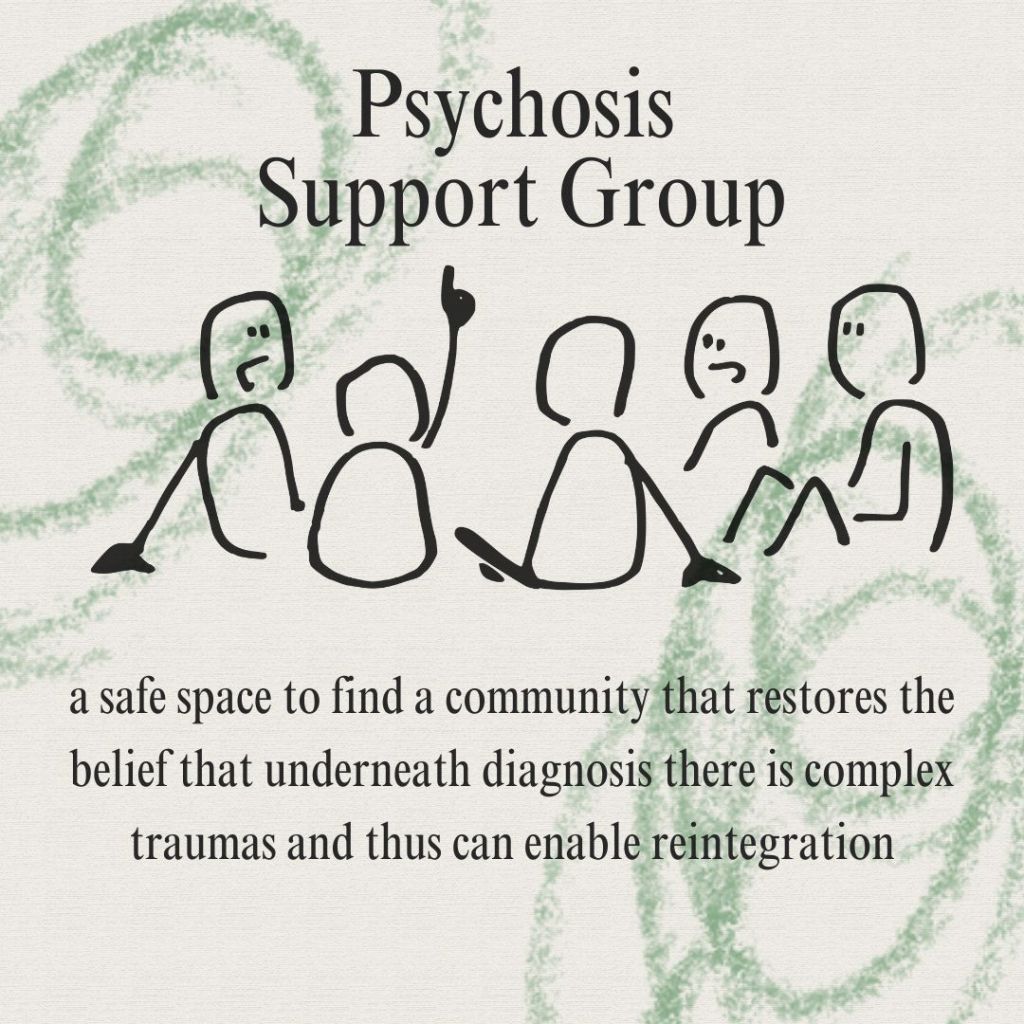
This is the intention of this support group to offer safe community space to few persons who have worked on their past complex traumas for many years in their personal work and now would like to engage with other persons who have been on similar journeys. This support group offers a safe space to grieve in companionship of others where you can share your grief and listen to other’s journey. In this companionship, you can find a belonging to this perspective and worldview that we were traumatized in early childhood, and it left deep wound in our psyche as we navigate through adulthood. We perhaps spent many years in confusion to make sense of our traumas that bewildered us. Probably some parts of us have become emotionally dead and we feel damaged. The belonging to fact that our childhood continues in us no matter how old we are. We grow from the place of our wounds.
If you relate to being traumatized in your early childhood and you have spent many years in personal work, depth psychotherapy or through spiritual practices, to understand and integrate your past, and now you are looking for a support group to find a community with persons who have gone through similar journey, then you can write to me.
Fees: There is no fee for this support group.
Mode: Online
Frequency: once a week
It would be self-facilitating group with an intention to mutually respect each other and share and listen to each other’s grief journey. This support group is not a therapy work but adjunct to personal therapy to support your self-work to integrate your early childhood part in a community.
Register for this support group by emailing at pankajsuneja6@gmail.com
 Pankaj Suneja